Boggsville History

Boggsville captures an array of historical themes, persons and events. It encompasses the Santa Fe Trail throughout its entire period between 1867 and 1873. Kit Carson lived the last year of his life at Boggsville and died three miles across the Arkansas River at Fort Lyon. Boggsville served as the first county seat of Bent County after its formation in 1870. Thomas Boggs, for whom the site is named, served as Bent County's sheriff. John Prowers served as a county commissioner. As a major site on the Santa Fe Trail throughout the 1860s into the early 1870s, Boggsville served as the nucleus of permanent settlement in southeastern Colorado and represented a microcosm of the events that contributed to the forming of the American Southwest.

The citizens of Boggsville comprised a panoply of diversity with cultural groups that included Americans, New Mexicans, Native Americans and Europeans. The multicultural aspect of the site is what contributes to the vast importance of this frontier settlement as it represents a true microcosm of the cultural interaction in the American Southwest. The men who began Boggsville were Missourians who had worked for William Bent of Bent's Old Fort and Bent's New Fort infamy. The establishment of Colorado Territory in 1860s, and the gold strikes in the Colorado mountains, served as the impetus for permanent settlement throughout Colorado. The settlement included one crucial difference in that these early communities were being populated by continuing the cross-cultural marriage or cohabitating patterns established with the initial cultural interactions where many of the men were marrying or living with Hispanic or Native American women, who also reflected aspects of their cultural makeup. In the case of Boggsville, as an example, Kit Carson was married to Josefa Jaramillo Bent, the step-daughter of Charles Bent. Thomas Boggs was married to Rumalda Jaramillo Luna, and was the niece of Josefa Carson. John Prowers, on the other hand, was married to Amache Ochinee Prowers, a Cheyenne woman whose father, Lone Bear or Ochinee, was killed at the Sand Creek Massacre. These cultural interactions, repeated throughout the American Southwest into the present, served as the important foundations for the settlement of southeastern Colorado.

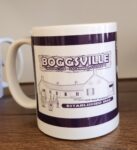
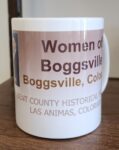
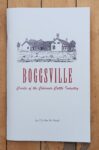
Boggsville Historic Site is located 2 miles south of the City of Las Animas on Colorado Highway 101 in historic Bent County. It maintains its original integrity and visible connection to the events and persons through the maintenance of the two restored original adobe historic houses built in the mid-to-late 1860s and the surrounding 110 acre property. The Boggs Prowers Houses were restored in the late 1980s and early 1990s. Both buildings represent the only extant remains of the 19th century village and are used to interpret aspects of the principal events and persons who lived at Boggsville in the 19th century. Although the houses are the only extant remains, historical archaeology has played a major role in assisting to interpret the site with valuable information gathered about the two additional wings of the Prowers House, the 1871 schoolhouse, the first in Bent County, the Boggsville Branch of the Santa Fe Trail, and the present search for the Prowers' "Trading House" and the Carson House. The information gleaned from the archaeology has served to provide valuable information both for two interpretive brochures, "Boggsville" and "The Women of Boggsville", and information for a series of wayside exhibits, strategically located along a self-guided walking trail, that explain other important historical locations and information about the site.

Welcome to Boggsville

Welcome to Boggsville

Bent County, where Boggsville is located, is rich in history and wildlife. According to the Colorado Division of Wildlife, there are 675 bird species in the North America. CO ranks 5th largest area for bird species in the US with 470 bird species. Bent County has 372 bird species with 400 species in the Southeast CO region, including rare species such as the Black Rail and the Piping Plover. According to birders, Southeast CO is considered an Important Birding Area. The Fall season is an exceptional time to visit with the changing colors of the Cottonwood Trees and the migrating birds.

About Boggsville

About Boggsville

Boggsville has an interpretive plan that provides interpretive displays at designated locations along a self-guided trail.

Read more about Boggsville

Location, Location, Location:

Location, Location, Location:

Boggsville is located in Bent County in southeastern Colorado. It was one of the first European-American settlements in the area, founded by Thomas Boggs and John Prowers. It was the location where the famous explorer, Kit Carson, spent his final days. The present location is home to the reconstructed homes of both Boggs and Prowers. There is an interpretive trail that encompasses the two home sites and living history programs that, during the tourist season (May-October), re-create the life and times of the 1860s.

The Prowers House

The Prowers House

The Prowers House began construction in 1867, with the final south addition being completed in 1869. When finished, it became a fourteen room, two story, "U" shaped adobe structure with a courtyard facing east and the main entry facing south. The courtyard orientation has been attributed to the fact that John Prowers' wife, Amache Prowers was the daughter of One Eye or Ochinee (a sub-chief of the southern Cheyenne), and in her culture, the house would have faced east, to greet the rising sun.

Read more about The Prowers House

Kit Carson's Home

Kit Carson's Home

Historical archaeology plays a vital role in the accurate redevelopment and interpretation of the historic site. The archaeological excavations that have been conducted beginning in 1989 have revealed the subsurface remains of the west and north wings of the Prowers House, the first schoolhouse in Bent County constructed in 1871, the Boggsville Branch of the Santa Fe Trail and test excavations in an attempt to reveal evidence of Kit Carson's home.

The Boggs House

The Boggs House

The house was the home of Thomas O. Boggs and his family from 1866 to 1877.

Read More about The Boggs House

Amache Ochinee Prowers

Amache Ochinee Prowers

Her name, Amache Ochinee Prowers reflects the worlds of her life, the daughter of a Cheyenne sub chief and the Victorian life with her marriage to John Prowers where some chose to call her Amy. Being Cheyenne and marrying outside the tribe was difficult and painful when in 1864 her father was murdered at the Massacre by Sand Creek. On this day, November 29, 1864, 675 U.S. volunteers, led by Colonel John Chivington, launched a dawn attack on the village of Cheyenne and Arapaho Tribes.